As glass and glazing businesses scale into 2026, the gap between "good enough" scheduling and purpose-built scheduling becomes expensive. The right platform doesn't just fill calendar slots. It shapes crew utilization, job completion speed, and ultimately, revenue.
This guide compares the top scheduling platforms available to glaziers in 2026, from industry-specific tools to general field service software, so you can pick one that actually fits how glass jobs move.
Key Takeaways
- Scheduling software syncs crews, jobsites, and materials to cut downtime and missed appointments
- Purpose-built platforms like GlassManager handle multi-stage glazing workflows generic calendars miss
- Generic tools like Jobber or ServiceTitan need workarounds for glazing-specific quoting and costing
- Choose based on industry fit, mobile access, integration depth, and scalability
Overview of Scheduling Software in the Glass & Glazing Industry
Scheduling software for glaziers coordinates technician dispatch, installation appointments, and project timelines. It's usually one module inside a broader field service or business management platform, not a standalone tool.
Glazing work doesn't follow a single-visit service model. A typical job moves through measurement, glass ordering, fabrication, and installation, often across weeks. A basic calendar app can book an appointment, but it can't track whether the glass has shipped or whether fabrication delays should push the install date.
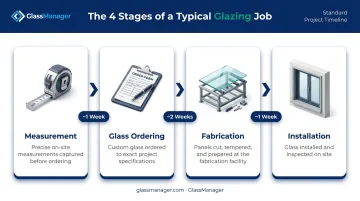
This is where generic scheduling tools fall short. Construction and service-management software adoption is growing across the trades. According to AGC's 2024 national survey, 22% of construction firms planned to increase investment in scheduling software, and 23% planned to increase spending on service-management software, based on responses from 1,114 firms.
The broader construction management software market backs up that momentum. Grand View Research pegs the market at $8.3 billion in 2026, growing to $16.4 billion by 2033 at a 10.2% compound annual growth rate.
Below, we compare five platforms glass businesses actually use in 2026, weighing industry relevance against general field service capability.
Top Scheduling Software for Glass Businesses in 2026
We evaluated each platform on five factors: glazing-industry relevance, mobile/field usability, integration depth with quoting and invoicing, scalability, and verified customer feedback.
GlassManager
GlassManager is an all-in-one business management platform built exclusively for residential and commercial glaziers. It combines CRM, estimating, scheduling, invoicing, and accounting integration in a single system, rather than bolting glazing workflows onto a generic field service tool.
What sets it apart:
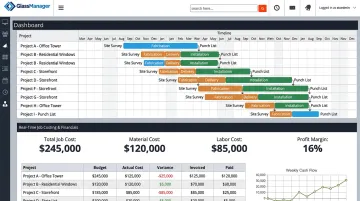
- Gantt chart project timelines built around glazing-specific job stages, not generic service calls
- GlassAI, which converts vendor quotes into branded customer proposals in seconds, tying quoting directly into the scheduling and job pipeline
- Automated SMS and email reminders sent to customers and crew ahead of scheduled visits
- Real-time job costing across labor, materials, and overhead, visible while the job is still active
- A mobile field app that lets crews access job details and update status even without signal
Glass businesses like Silver State Glass & Mirror and A Glasco use GlassManager to run scheduling and job management from one dashboard instead of stitching together separate apps.
| Category | Details |
|---|---|
| Key Features | Gantt chart scheduling, GlassAI-powered quoting, integrated SMS/Messenger, mobile field app, real-time job costing |
| Pricing | Lite, Pro, and Enterprise tiers, scaled to business size (pricing on request) |
| Best For | Residential and commercial glaziers who want one platform instead of five |
Jobber
Jobber is a general field service management platform used across home service trades, including a fair number of glass and window contractors who need straightforward scheduling without industry-specific overhead.
Its strength is polish: drag-and-drop scheduling, a client hub where customers can approve quotes and pay invoices online, and route optimization for daily crew routing. What it doesn't offer is glazing-specific job costing or multi-stage project templates. A measure-to-install workflow has to be manually tracked with tags or custom fields.
| Category | Details |
|---|---|
| Key Features | Scheduling, invoicing, client communication, route optimization |
| Pricing | Core from $29/mo (annual), Connect from $99/mo, Grow from $149/mo, Plus from $399/mo |
| Best For | Small glass businesses wanting general-purpose scheduling without glazing customization |
Housecall Pro
Housecall Pro is a scheduling and dispatch platform popular with home service contractors, including some smaller glass repair shops.
Differentiators include an online booking widget, automated dispatch that assigns the right tech to a job, and built-in payment processing. The trade-off: no multi-stage project tracking. A job that spans measure, order, and install shows up as separate appointments rather than a connected timeline.
Independent review data backs up its ease-of-use reputation. Software Advice reports Housecall Pro at 4.7 out of 5 stars from 2,736 reviews, well ahead of more complex enterprise competitors.
| Category | Details |
|---|---|
| Key Features | Online booking, dispatch, payments, customer notifications |
| Pricing | Basic from $59/mo, Essentials from $149/mo, Max from $299/mo |
| Best For | Small residential glass repair businesses needing simple booking and dispatch |
ServiceTitan
ServiceTitan is an enterprise-grade field service platform widely used in HVAC, plumbing, and electrical. Some larger commercial glazing operations use it too, mostly where dispatch volume justifies the complexity.
It offers a full-featured dispatch board, deep reporting and analytics, and call booking built for high-volume service calls. The catch: pricing is quote-only, based on a per-technician model, and the learning curve is steep for a smaller shop. Software Advice's same comparison shows ServiceTitan at 4.3 out of 5 from 325 reviews — solid, but reflecting a smaller, more specialized user base than Housecall Pro's.
| Category | Details |
|---|---|
| Key Features | Dispatch board, reporting/analytics, call booking, technician tracking |
| Pricing | Starter, Essentials, and The Works plans; pricing by quote only |
| Best For | Large commercial glazing operations with dedicated dispatch teams and larger budgets |
Connecteam
Connecteam is an employee scheduling and workforce management app used across many industries, not built specifically for field service dispatch or customer bookings.
It handles drag-and-drop shift scheduling, a GPS time clock, and team chat well. What it doesn't handle: glazing-specific quoting, job costing, or project timelines. It fits better as a staffing companion alongside dedicated job management software, not as a replacement for one.
| Category | Details |
|---|---|
| Key Features | Shift scheduling, GPS time clock, task management, team chat |
| Pricing | Free for up to 10 users; Basic from $29/mo, Advanced from $49/mo, Expert from $99/mo |
| Best For | Glass businesses needing workforce/shift scheduling rather than end-to-end job management |
How We Chose the Best Scheduling Software
Our evaluation centered on whether each platform actually supports glazing-specific workflows, not just generic appointment booking. A common mistake glass businesses make is picking scheduling software built for one-visit service calls, then discovering it can't track a job through measure, order, fabricate, and install stages.
We weighted these factors heavily:
- Mobile field usability: Crews need to update jobs from a truck or jobsite, even with spotty connectivity.
- Integration depth: Scheduling should connect to quoting, invoicing, and accounting instead of living in isolation.
- Scalability: The platform must grow from a two-person shop into a multi-crew commercial operation.
- Real-time job cost visibility: You should see labor, materials, and overhead as the job progresses, not after it's closed.
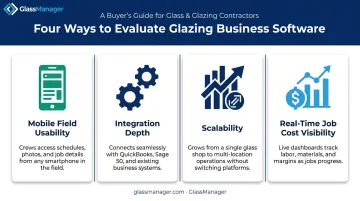
These factors matter because they directly affect crew utilization and profitability, not just calendar tidiness.
Conclusion
The best scheduling software for a glass business in 2026 does more than fill a calendar. It matches how glazing jobs actually move, from measure to install to invoice, without forcing your team into manual workarounds.
Finding that fit means looking past feature lists. Weigh scalability, integration depth, and total cost of ownership before committing to a platform, since brand recognition matters less than whether the tool fits your daily workflow.
When scheduling, quoting, and job costing live in separate apps, work slows down and details fall through the cracks. GlassManager's all-in-one platform was built specifically for glaziers who need those pieces working together.
Frequently Asked Questions
What is the best scheduling software for a glass business?
Purpose-built platforms like GlassManager outperform generic tools because they're designed around glazing-specific job stages, such as measuring, fabrication, and installation, rather than single-visit service calls.
How much does scheduling software for glaziers typically cost?
Pricing ranges from free basic plans (like Connecteam's 10-user tier) to $300+ per month for feature-rich platforms. Industry-specific tools like GlassManager offer tiered Lite, Pro, and Enterprise plans that scale with business size.
Can glass business scheduling software integrate with accounting tools like QuickBooks?
Yes. Most modern platforms, including GlassManager, integrate with QuickBooks Online, QuickBooks Desktop, and Sage 50 to sync invoices, payments, and timesheets automatically.
Is scheduling software necessary for a small glass business?
Even small glazing shops benefit as job volume grows. Automated reminders, reduced double-bookings, and better crew utilization pay off quickly once you're juggling more than a few jobs a week.
What features should glass businesses look for in scheduling software?
Look for mobile field access, real-time job costing, multi-stage project tracking (measure to install), and automated customer reminders. These features address the specific gaps generic calendars leave open.
Does GlassManager offer field team scheduling and dispatch features?
Yes. GlassManager includes Gantt chart project timelines, a mobile field app for crews, and automated SMS/email reminders tied directly to scheduled jobs and appointments.