Introduction
Picture a glazier mid-project: the specialty laminated glass is two weeks out, the aluminum extrusion vendor just raised prices without warning, and the hardware distributor shipped the wrong hinge kit. Sound familiar?
This scramble typically stems from disorganized vendor communication, one of the most common reasons glazing projects run over budget and past deadline.
Supplier Relationship Management (SRM) sounds like a term reserved for Fortune 500 procurement departments. It isn't. Any glass and glazing business that depends on outside vendors for materials can apply SRM principles, no enterprise software suite required.
This article breaks down what SRM actually means and why it matters for trade businesses specifically. You'll get the five-step process behind it, common pitfalls to avoid, and how the right software makes it manageable for a small or mid-sized shop.
Key Takeaways
- SRM segments vendors by risk and importance so your attention goes where it matters most
- Structured supplier collaboration has driven material-cost reductions of 10-20% in published industry case studies
- Material shortages remain a leading cause of project delays reported by contractors
- Centralized purchase order data replaces scattered emails and guesswork
- Small glazing shops can apply SRM without a dedicated procurement team
What Is Supplier Relationship Management (SRM)?
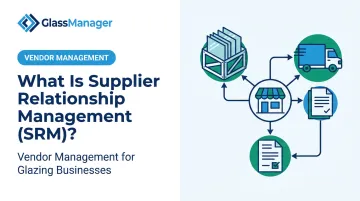
SRM is the systematic, ongoing evaluation and cultivation of relationships with the vendors who supply your goods, materials, and services. It requires continuous discipline that goes beyond one-time vetting.
That distinction dates back to 1983, when procurement analyst Peter Kraljic published "Purchasing Must Become Supply Management" in Harvard Business Review. Kraljic argued that purchasing needed to shift from a purely operational task to a strategic function, largely because scarcity, political risk, and market complexity were making supply chains riskier.
His matrix plots purchases across two axes, profit impact and supply risk, to determine how much strategic investment each supplier relationship deserves.
Beyond Placing Orders and Paying Invoices
Transactional purchasing stops at the invoice. SRM goes further:
- Evaluates performance continuously across delivery, quality, and pricing
- Collaborates on forecasts and capacity planning
- Solves problems jointly when issues arise
- Plans proactively instead of scrambling reactively
Not Every Supplier Deserves the Same Attention
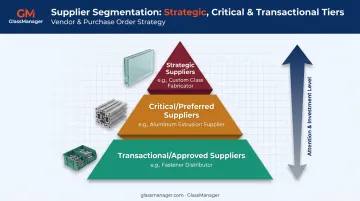
Supplier segmentation is the backbone of SRM. Vendors typically fall into three tiers:
- Strategic suppliers: Integral to your value chain; losing them disrupts operations
- Critical or preferred suppliers: Important, favorable terms, but replaceable with effort
- Transactional or approved suppliers: Standard goods, low switching cost
For a glazier, a specialty fabricator producing custom laminated units is likely a strategic supplier. A distributor selling standard fasteners is transactional. Treating both the same wastes time you could spend nurturing the relationship that actually protects your project timelines.
This isn't limited to manufacturers. Any project-based contractor, glaziers included, benefits from knowing which vendor relationships need active management and which just need a reliable order process.
Key Benefits of Supplier Relationship Management
Done well, SRM changes how vendors treat you, and how much you spend.
Lower Total Cost of Ownership
Understanding a supplier's cost structure lets you negotiate smarter instead of guessing. McKinsey's research on structured supplier collaboration found 10-20% material-cost reductions in specific categories among participating companies, with one retailer case showing 15% lower supply-chain costs and 20% lower inventory costs.
These aren't universal guarantees, but they show what's possible when the relationship moves past pure transaction.
Reduced Risk and Fewer Surprises
Real-time visibility into vendor reliability and pricing trends means fewer last-minute shocks. When you know a supplier's lead times are slipping before your project timeline depends on it, you can adjust early instead of scrambling.
Priority Treatment When It Matters
Suppliers remember who communicates well and pays on time. During material shortages, that goodwill often translates into:
- Get faster callbacks on urgent orders
- Receive advance notice on price increases
- Secure first access to limited stock
Data Over Gut Instinct
Tracking on-time delivery, quality, and pricing accuracy over time replaces "I think this vendor is reliable" with actual evidence. GlassManager's purchase order and vendor management tools capture this history automatically, so you're not relying on a spreadsheet. That data feeds directly back into your segmentation decisions.
The Supplier Relationship Management Process: 5 Key Steps
SRM works as an ongoing cycle rather than a one-time project. Here's how it typically unfolds:
Segment suppliers: Categorize vendors by material type, order volume, risk, and criticality. A glass fabricator supplying custom insulated units gets different treatment than a sealant distributor.
Develop a supplier strategy: Build a tailored approach per segment: negotiation terms, communication frequency, and backup vendor plans to reduce dependency risk.
Build the relationship: Move past transactions. Share project forecasts, get early notice on price changes, and establish trust before you need it during a crisis.
Execute the strategy: Put the plan into action through purchase order management, fulfillment tracking, and ongoing collaboration toward agreed goals. Platforms like GlassManager centralize this work, tracking POs and vendor communication in one place.
Monitor and improve: Regularly review performance on delivery timeliness, quality, and cost. Feed that data back into segmentation for the next cycle.
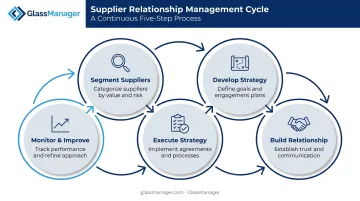
This cycle repeats. Suppliers that perform well may move up in priority; those that consistently underdeliver get re-evaluated or replaced.
SRM vs. Supplier Management: What's the Difference?
The terms get used interchangeably, but they're not identical.
| Aspect | Supplier Relationship Management | Supplier Management |
|---|---|---|
| Focus | Relationship-building, collaboration, trust | Full lifecycle: information, performance, risk, forecasting |
| Scope | Narrower: the "human" side of vendor dealings | Broader — includes SRM as one component |
| Common users | Small and mid-sized businesses | Larger enterprises with digital procurement platforms |
SRM refers specifically to how you cultivate and maintain the vendor relationship itself. Supplier management is the umbrella term, covering everything from supplier data and risk tracking to performance scorecards and demand forecasting.
Smaller trade businesses tend to stick with "SRM" because their needs are more relational than systems-heavy. Larger organizations increasingly favor "supplier management" to describe expanded digital platforms.
Common Challenges in Supplier Relationship Management
Even businesses that understand SRM in theory run into real friction applying it.
Over-reliance on too few vendors. If your specialty glass fabricator is your only source, a single delay or price hike puts every project at risk. In fact, more than half of contractors, 52%, have experienced a project delay caused by shortages of materials, equipment, or parts, according to an Associated General Contractors survey reported by ENR. Diversifying vendors reduces that risk, but even a wider supplier base can quietly drift out of alignment.
Misalignment over time. Pricing, capacity, and priorities shift. A supplier that was competitive last year might not be today, but if nobody's tracking that, you find out during a bid, not before. Spotting that drift early requires visibility most shops simply don't have.
Limited visibility from manual processes. Relying on scattered emails, verbal agreements, and spreadsheets makes it nearly impossible to spot patterns:
- Which vendor consistently ships late?
- Whose pricing quietly crept up over six months?
- Which supplier's quality issues are becoming a pattern?
Without centralized tracking, these problems surface only after they've already cost you a job.
How the Right Software Supports SRM for Glass and Glazing Businesses
Glaziers juggle more vendor types than most trades: glass fabricators, aluminum and vinyl extrusion suppliers, hardware distributors, and sealant manufacturers. Every one of them affects project timelines and margins. Organized vendor data isn't optional here: it's the difference between a profitable job and a break-even one.
Centralizing Purchase Orders and Material Data
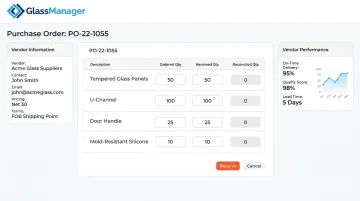
GlassManager's Purchase Order module connects directly to its materials and inventory database. Instead of retyping vendor details every time you place an order, the system auto-populates supplier contacts, terms, and pricing from records already on file. Purchase orders can also link automatically from an existing estimate, so job materials identified during quoting carry straight through without re-entry.
That connection matters for SRM specifically. When ordered and received quantities are tracked side by side, and vendor invoices are reconciled against actual deliveries, you get performance visibility that manual spreadsheets never provided.
Turning Vendor Quotes Into Customer Proposals, Fast
GlassAI takes this a step further. Upload a vendor's PDF quote, and the system extracts item descriptions, quantities, and pricing automatically. From there, it applies your markup and branding, and produces a customer-ready proposal in seconds. That tighter link between supplier pricing and your quoting workflow cuts down on errors from copying data by hand across multiple documents.
Extending Collaboration Beyond the Transaction
GlassManager's partnership program connects glaziers with material suppliers, technology providers, and industry associations directly through the platform. Material partners can integrate their catalogs so glaziers see live pricing and product updates without leaving the platform. It's a practical example of SRM's core idea: the relationship works better when both sides share visibility, not just a transaction record.
Frequently Asked Questions
What is Supplier Relationship Management software?
SRM software centralizes supplier data, automates performance tracking, and replaces manual spreadsheets with real-time visibility into vendor relationships. It gives businesses one place to manage pricing, orders, and communication history per vendor.
What is the difference between SRM and supplier management?
SRM focuses specifically on relationship-building, communication, and trust with vendors. Supplier management is the broader function, encompassing SRM plus risk tracking, performance data, and forecast collaboration.
What are the main benefits of supplier relationship management?
Core benefits include lower total costs, reduced supply risk, stronger collaboration, and faster, more responsive service from suppliers, especially during shortages or urgent timelines.
What are the key steps in the SRM process?
The cycle runs through five stages: segmenting suppliers, developing a tailored strategy per segment, building the relationship, executing the plan, and monitoring performance to improve the next cycle.
Why does SRM matter for small businesses and contractors, not just large enterprises?
Any business dependent on outside vendors for materials benefits from organized supplier evaluation. A small glazing shop faces the same shortage and pricing risks as a large manufacturer, just at a smaller scale.
How does technology improve supplier relationship management?
Centralized platforms with purchase order tracking, quoting tools, and integrated vendor data let even small trade businesses apply SRM principles without needing a dedicated procurement team or enterprise-grade system. Platforms like GlassManager build these tools directly into glass and glazing workflows, pairing vendor and PO management with estimating and job costing in one system.